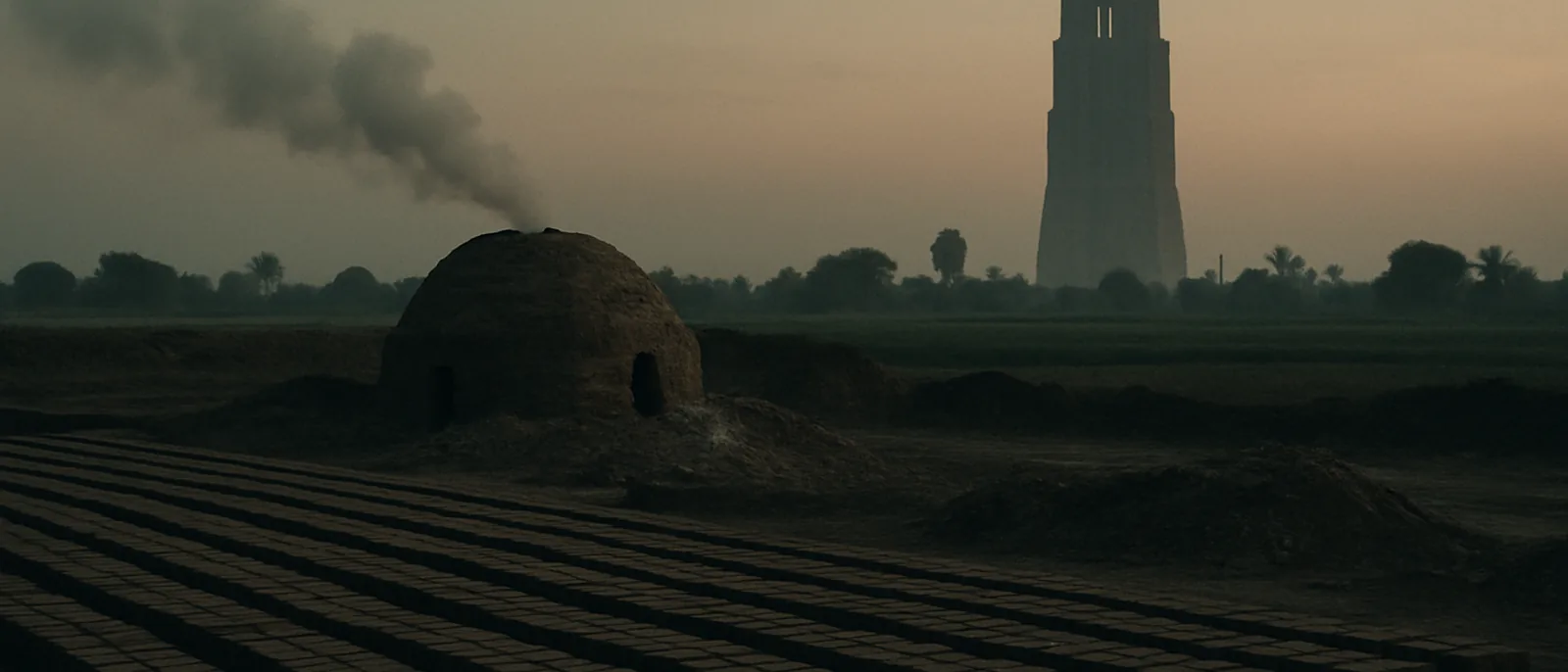
This entry examines the Qur'an's presentation of Haman as a high official in Pharaoh's Egypt — a detail long criticized as a confusion with the Persian Haman of the Book of Esther. The case made on the Qur'an's behalf here is largely defensive, and a widely circulated 'hieroglyph discovery' claim does not withstand scrutiny.
The source text
وَقَالَ فِرْعَوْنُ يَـٰٓأَيُّهَا ٱلْمَلَأُ مَا عَلِمْتُ لَكُم مِّنْ إِلَـٰهٍ غَيْرِى فَأَوْقِدْ لِى يَـٰهَـٰمَـٰنُ عَلَى ٱلطِّينِ فَٱجْعَل لِّى صَرْحًا لَّعَلِّىٓ أَطَّلِعُ إِلَىٰٓ إِلَـٰهِ مُوسَىٰ وَإِنِّى لَأَظُنُّهُۥ مِنَ ٱلْكَـٰذِبِينَ
“And Pharaoh said, "O eminent ones, I have not known you to have a god other than me. Then ignite for me, O Haman, [a fire] upon the clay and make for me a tower that I may look at the God of Moses. And indeed, I do think he is among the liars."”
Qur'an 28:38 · Saheeh International
وَقَالَ فِرْعَوْنُ يَـٰهَـٰمَـٰنُ ٱبْنِ لِى صَرْحًا لَّعَلِّىٓ أَبْلُغُ ٱلْأَسْبَـٰبَ
“And Pharaoh said, "O Haman, construct for me a tower that I might reach the ways."”
Qur'an 40:36 · Saheeh International
What was understood in the seventh century
The only Haman known to seventh-century audiences was the villain of the biblical Book of Esther: a vizier of the Persian king Ahasuerus (Xerxes I, fifth century BCE), roughly a thousand years and a different empire removed from Moses' Egypt. Since at least the eighteenth century, critics have accordingly charged the Qur'an with transplanting Esther's Persian courtier — along with echoes of the tower of Babel — into the Egyptian court.
The Qur'an itself presents Haman without biographical comment. In Surah al-Qasas and Surah Ghafir he appears simply as a high official whom Pharaoh orders to fire clay and erect a lofty structure: a narrative role, not a genealogy.
The modern correspondence
The most widely circulated Muslim response, popularized by Maurice Bucaille in 'Moses and Pharaoh' (1994) and later by Harun Yahya websites, claims that the name 'Haman' was found in an Egyptian hieroglyphic inscription designating a 'chief of the workers in the stone-quarries,' via Hermann Ranke's dictionary of Egyptian personal names. This specific claim does not hold up. The dictionary entry in question is a doubtful reading that Ranke himself printed with a question mark, the 'stone-quarry' title belongs to a different reference, and Egyptian writing records no vowels, so no hieroglyphic name can be matched to the Arabic vocalization 'Haman.' A detailed critical analysis of the claim is listed in the references below; this entry does not present the hieroglyph identification as fact.
A more modest scholarly defense remains available: the Qur'anic Haman may simply be a distinct figure — a court name or title that need not be Esther's Haman — and his narrative role as overseer of brick-firing and monumental building is consistent with what is known of Egyptian administration. But no inscription naming such an official has been credibly identified, so the defense establishes absence of contradiction rather than positive corroboration.
Considerations and counterpoints
The straightforward skeptical reading is that the Qur'an transposed the famous villain of Esther into the Exodus story, blending him with the Tower of Babel motif — a tower of fired brick built to reach the heavens (compare Genesis 11:3-4). The name, the tower, and the arrogant king cohere closely with that literary background, and even sympathetic academic treatments concede that no Egyptian official named 'Haman' is attested. With the Bucaille hieroglyph claim documented as a misreading, defenders are left arguing that nothing disproves a distinct Egyptian Haman. The case here is weak by this site's standards, which is why it carries a Tier 3 grading.
Credibility rating: Tier 3 · Contested — The citation is authentic, but the popular hieroglyph 'discovery' is contested to the point of unreliability, leaving only a defensive argument (distinct figure) rather than positive extra-Qur'anic corroboration.