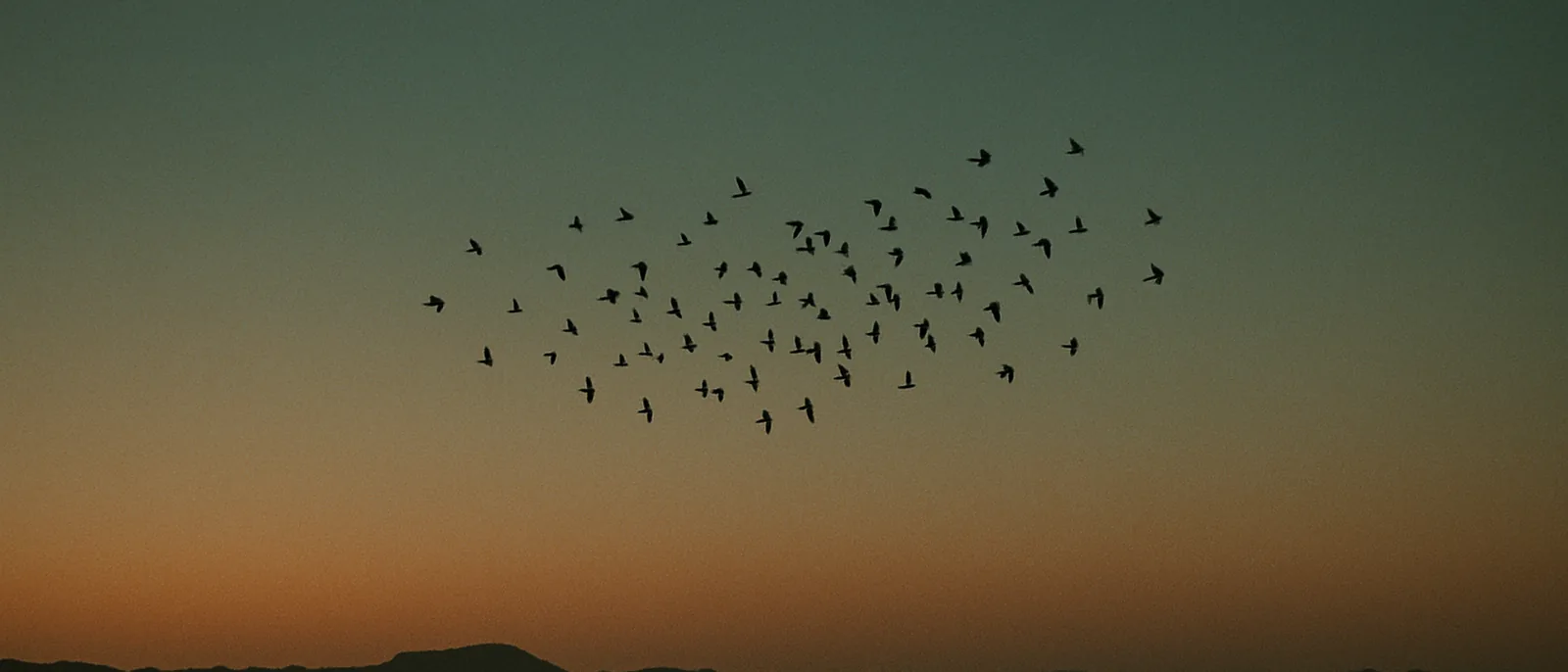
This entry examines the description of land animals and birds in Surah al-An'am 6:38 as "communities like you." It asks how much weight a scientific reading of that broad phrase can bear, and the case here is weak.
The source text
وَمَا مِن دَآبَّةٍ فِى ٱلْأَرْضِ وَلَا طَـٰٓئِرٍ يَطِيرُ بِجَنَاحَيْهِ إِلَّآ أُمَمٌ أَمْثَالُكُم ۚ مَّا فَرَّطْنَا فِى ٱلْكِتَـٰبِ مِن شَىْءٍ ۚ ثُمَّ إِلَىٰ رَبِّهِمْ يُحْشَرُونَ
“And there is no creature on [or within] the earth or bird that flies with its wings except [that they are] communities like you. We have not neglected in the Register a thing. Then unto their Lord they will be gathered.”
Qur'an 6:38 · Saheeh International
What was understood in the seventh century
In seventh-century Arabia animals were generally regarded as resources for human use or as objects of the hunt, rather than as organised societies comparable to human communities. To describe land creatures and birds as umam, nations or communities, like human beings, was not a commonplace of the surrounding culture, and in that sense the phrasing is arresting.
The verse's own emphasis, however, is theological. It states that no creature and no bird exists "except communities like you," that nothing has been neglected "in the Register," and that these creatures "unto their Lord will be gathered." The frame is one of divine order and accountability rather than a description of animal social behaviour, and classical commentary read the comparison largely in that light.
The modern correspondence
Modern ethology and sociobiology, developed across the twentieth century, document complex social organisation in many species, including bees, ants, wolves, primates and numerous birds, with cooperation, division of labour, signalling and hierarchy. Some commentators read 6:38 as anticipating this recognition of animal social order, and the phrase has also been invoked in later discussions of animal welfare and biodiversity.
The correspondence, though, is loose. "Communities like you" is a general phrase, and its match to specific findings in sociobiology is a matter of resonance rather than a particular fact that could not have been stated earlier. That some animals live socially, in flocks, herds and hives, was itself partly observable in antiquity, so the verse cannot be tied to a discovery inaccessible to its first audience.
Considerations and counterpoints
Critics note that classical commentators mostly understood umam in a religious or existential sense, that all creatures form ordered kinds answerable to God, rather than as a claim about animal sociobiology. Some social behaviour in animals was already visible in antiquity, and the verse is broad enough that it cannot be pinned to a specific, previously unknown fact. Defenders may reply that the comparison to human communities is nonetheless generous and forward-looking, but even granting that, the verse names no mechanism and identifies no fact that was hidden at the time. Read fairly, this entry is better treated as an evocative theological statement than as a scientific prediction, and its place in the collection rests more on suggestive language than on a documented correspondence.
Credibility rating: Tier 3 · Contested — The text is authentic and evocative, but the phrase 'communities like you' is broad and its primary classical meaning is theological (all creatures are ordered and accountable to God), so the scientific reading is loose.