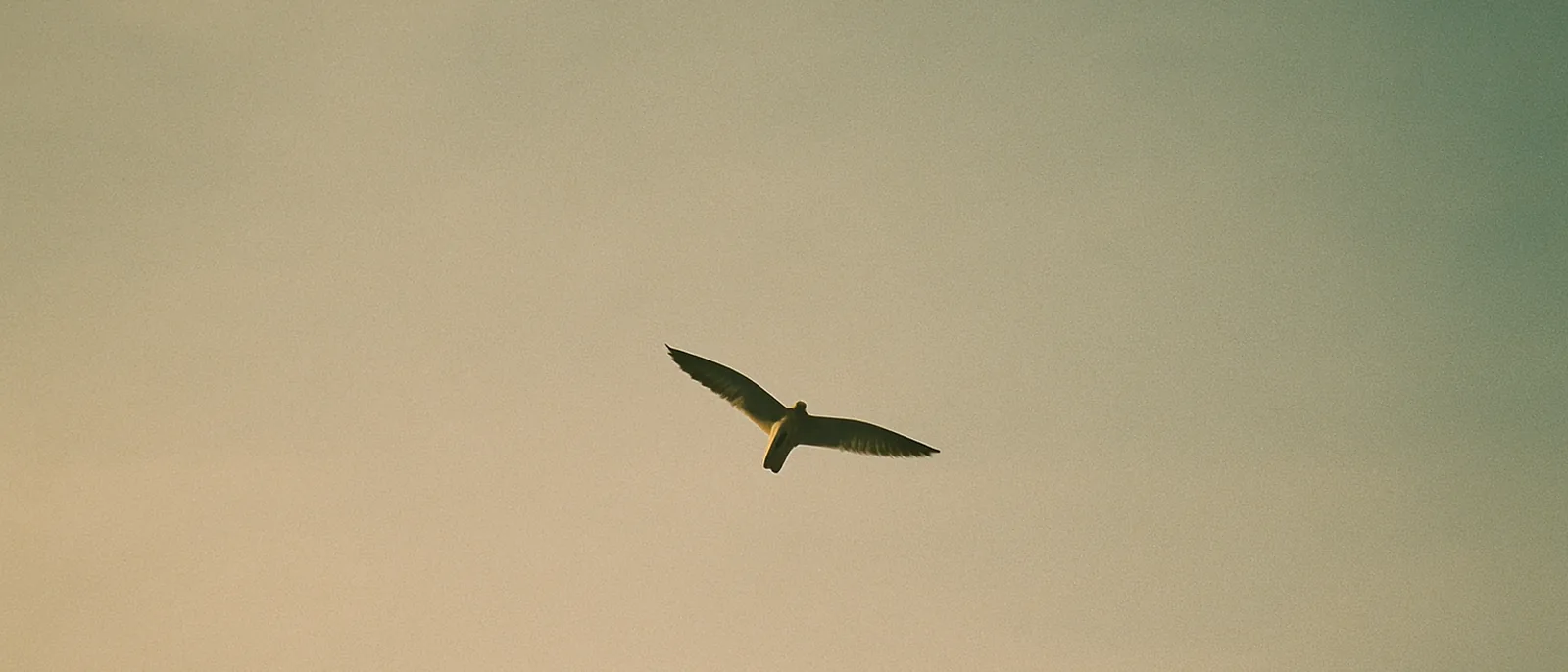
This entry examines the description of birds held aloft in Surah al-Mulk 67:19 and an-Nahl 16:79. It weighs a reading in terms of aerodynamics against the plain fact that bird flight is directly observable, and the case here is weak.
The source text
أَوَلَمْ يَرَوْا۟ إِلَى ٱلطَّيْرِ فَوْقَهُمْ صَـٰٓفَّـٰتٍ وَيَقْبِضْنَ ۚ مَا يُمْسِكُهُنَّ إِلَّا ٱلرَّحْمَـٰنُ ۚ إِنَّهُۥ بِكُلِّ شَىْءٍ بَصِيرٌ
“Do they not see the birds above them with wings outspread and [sometimes] folded in? None holds them [aloft] except the Most Merciful. Indeed He is, of all things, Seeing.”
Qur'an 67:19 · Saheeh International
أَلَمْ يَرَوْا۟ إِلَى ٱلطَّيْرِ مُسَخَّرَٰتٍ فِى جَوِّ ٱلسَّمَآءِ مَا يُمْسِكُهُنَّ إِلَّا ٱللَّهُ ۗ إِنَّ فِى ذَٰلِكَ لَـَٔايَـٰتٍ لِّقَوْمٍ يُؤْمِنُونَ
“Do they not see the birds controlled [i.e., their flight facilitated] in the atmosphere of the sky? None holds them up except Allāh. Indeed in that are signs for a people who believe.”
Qur'an 16:79 · Saheeh International
What was understood in the seventh century
Bird flight was watched with wonder in seventh-century Arabia but was not explained. There was no concept of aerodynamic lift, of air pressure, or of the atmosphere as a medium that must actively sustain a body against gravity. The verses point to the birds being "held" in the air of the sky, none holding them up but God, and describe the alternating spreading and folding of the wings, saffat (outstretched) and yaqbidn (folded).
The primary purpose of both passages is to direct the reader to reflect on this sight and to attribute it to God. In 16:79 the birds are said to be "controlled" or facilitated in the atmosphere of the sky as a sign for those who believe, and in 67:19 the same holding is ascribed to the Most Merciful.
The modern correspondence
Aerodynamics, formalised from the eighteenth century onward, explains that lift is generated as a wing interacts with the surrounding air, and that gliding with wings extended alternates with flapping and folding to control that flow. Commentators observe that the verses' emphasis on the air itself as the holding medium, and on the two wing positions, fits the mechanics of avian flight reasonably well.
The imagery, though accurate, is observationally available. Anyone can watch a bird spread and fold its wings and remain suspended, so the verses do not require knowledge inaccessible to their first audience. The description matches later science without disclosing anything that could not be seen directly at the time.
Considerations and counterpoints
Skeptics point out that flying birds, and the spreading and folding of their wings, were plainly visible to seventh-century observers, so no hidden knowledge is needed to describe them. The phrase "none holds them but God" is a theological statement about divine sustenance, and reading modern aerodynamics into "held in the air" is a retrofit. Defenders may note that singling out the air itself as the sustaining medium is a subtler observation than merely watching a bird pass overhead, but even this falls short of stating a mechanism that was inaccessible at the time. On balance the passage is best understood as an invitation to reflect on a visible wonder rather than as a disclosure of previously unknown physics, which makes it a weak candidate for a scientific sign.
Credibility rating: Tier 3 · Contested — The imagery is accurate and elegant but observationally available (anyone can watch birds spread and fold their wings and stay aloft), and the verses' primary purpose is to attribute this to God, so it is a weak candidate for previously inaccessible knowledge.