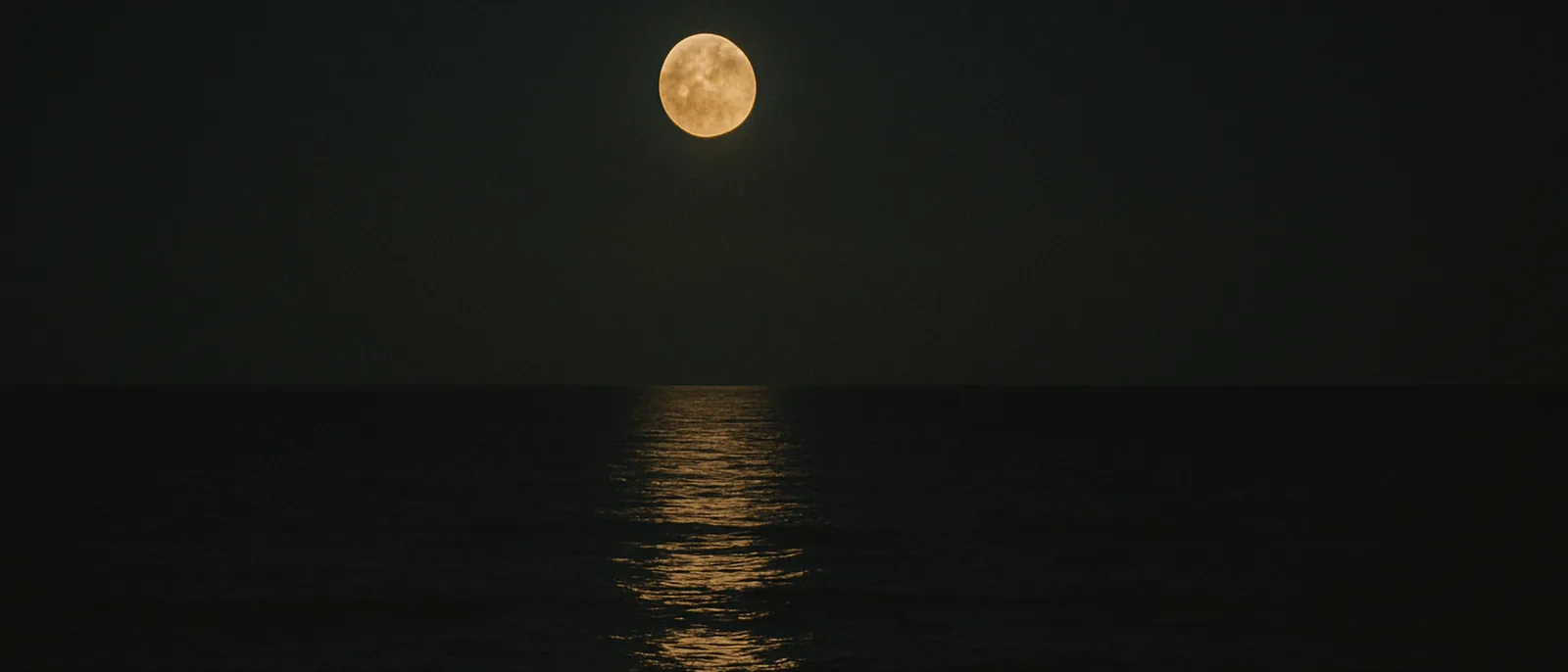
This entry examines the Qur'an's consistent word choice for the two great lights — the sun as a burning lamp (siraj, diya), the moon as a light (nur, munir) — across Surahs Yunus 10:5, Nuh 71:15–16, and al-Furqan 25:61, and the argument that this lexical separation fits the fact that moonlight is reflected sunlight.
The source text
هُوَ ٱلَّذِى جَعَلَ ٱلشَّمْسَ ضِيَآءً وَٱلْقَمَرَ نُورًا وَقَدَّرَهُۥ مَنَازِلَ لِتَعْلَمُوا۟ عَدَدَ ٱلسِّنِينَ وَٱلْحِسَابَ ۚ مَا خَلَقَ ٱللَّهُ ذَٰلِكَ إِلَّا بِٱلْحَقِّ ۚ يُفَصِّلُ ٱلْـَٔايَـٰتِ لِقَوْمٍ يَعْلَمُونَ
“It is He who made the sun a shining light and the moon a derived light and determined for it phases - that you may know the number of years and account [of time]. Allah has not created this except in truth. He details the signs for a people who know.”
Qur'an 10:5 · Saheeh International
أَلَمْ تَرَوْا۟ كَيْفَ خَلَقَ ٱللَّهُ سَبْعَ سَمَـٰوَٰتٍ طِبَاقًا
“Do you not consider how Allah has created seven heavens in layers”
Qur'an 71:15 · Saheeh International
وَجَعَلَ ٱلْقَمَرَ فِيهِنَّ نُورًا وَجَعَلَ ٱلشَّمْسَ سِرَاجًا
“And made the moon therein a [reflected] light and made the sun a burning lamp.”
Qur'an 71:16 · Saheeh International
تَبَارَكَ ٱلَّذِى جَعَلَ فِى ٱلسَّمَآءِ بُرُوجًا وَجَعَلَ فِيهَا سِرَٰجًا وَقَمَرًا مُّنِيرًا
“Blessed is He who has placed in the sky great stars and placed therein a [burning] lamp and luminous moon.”
Qur'an 25:61 · Saheeh International
What was understood in the seventh century
In seventh-century Arabia and its neighboring cultures the sun and moon were commonly paired as two luminaries of the same kind — in Genesis, “the greater light” and “the lesser light” — and several Arabian cults treated the moon as a deity radiating its own light. Everyday belief made no qualitative distinction between the two lights beyond brightness, and moon cults are among the best-attested religious practices of ancient Arabia and its neighbors.
Some Greek thinkers had gone further: Anaxagoras in the fifth century BC, and later Aristotle and Ptolemy within technical astronomy, argued that the moon shines by reflected sunlight. But this remained specialist knowledge, with no evidence of circulation in the Hijaz of the Prophet Muhammad (peace be upon him).
The modern correspondence
Modern astronomy confirms a fundamental physical difference between the two bodies. The sun generates light through nuclear fusion in its core; the moon produces no visible light of its own and merely reflects sunlight, with a low average albedo of about 0.12. NASA's “Moonlight” page states the point plainly: moonlight is reflected sunlight. The distinction matters for the argument: a lamp generates light by burning, while a lit surface only returns a fraction of what falls on it.
Commentators observe that the Qur'an consistently uses combustion-and-radiance words for the sun — siraj (“lamp”), diya (“blazing light”), wahhaj (“burning intensely,” 78:13) — but never applies them to the moon, which is always nur (“light”) or munir (“giving light”). The correspondence argued here rests on that separation holding across many verses without exception, a pattern not empirically settled for lay audiences until the telescope era. Proponents add that the vocabulary never crosses over in either direction, despite the two bodies being mentioned many times and often side by side.
Considerations and counterpoints
Critics note that nur simply means “light” and is elsewhere applied to God (24:35) and to revelation, with no connotation of reflection; the words “[reflected]” and “[derived]” in the Saheeh International translation are translator interpolations, marked as such by brackets. The contrast in brightness between sun and moon was obvious to any observer and parallels the Bible's greater and lesser lights, so distinct vocabulary need not imply knowledge of reflection. Moreover, Greek philosophers had articulated lunar reflection a millennium earlier, so the idea was not unavailable in principle in late antiquity. The claim is thus an argument from consistent word choice rather than from an explicit statement.
What remains for the reader to weigh is the pattern itself: across every passage that names the two bodies, the burning vocabulary attaches only to the sun and the plain light vocabulary only to the moon. Whether that consistency reflects knowledge, instinct, or coincidence is exactly the interpretive question, and the entry is rated to match.
Credibility rating: Tier 2 · Interpretive — The lexical distinction is real and consistent, but nur does not by itself mean 'reflected', so the claim rests on an argument from word choice rather than an explicit statement.