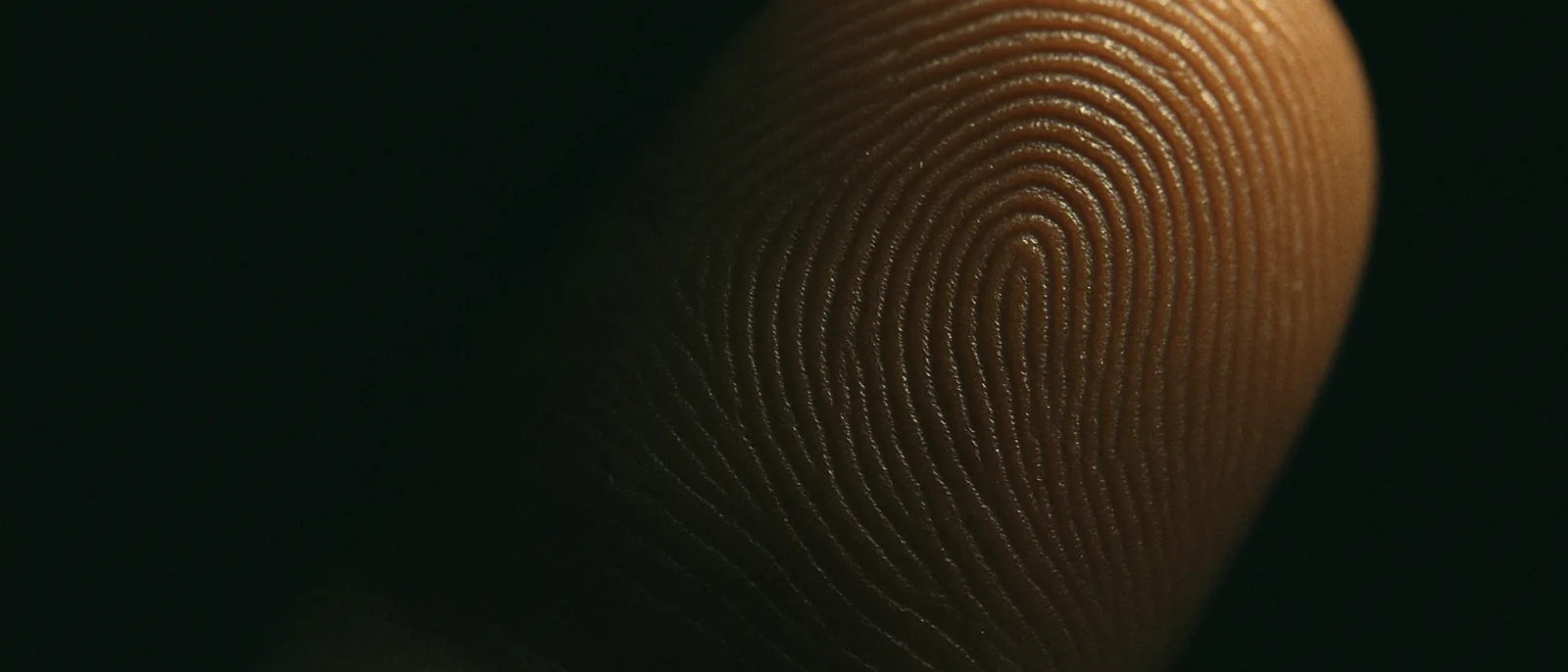
This entry examines Surah al-Qiyamah 75:3-4, which singles out the fingertips (banan) when speaking of God's power to reassemble the body at the resurrection, and the reading that connects this to the uniqueness of fingerprints.
The source text
أَيَحْسَبُ ٱلْإِنسَـٰنُ أَلَّن نَّجْمَعَ عِظَامَهُۥ
“Does man think that We will not assemble his bones?”
Qur'an 75:3 · Saheeh International
بَلَىٰ قَـٰدِرِينَ عَلَىٰٓ أَن نُّسَوِّىَ بَنَانَهُۥ
“Yes. [We are] Able [even] to proportion his fingertips.”
Qur'an 75:4 · Saheeh International
What was understood in the seventh century
In the seventh century the fingertips were not known to bear individually unique, permanent patterns. There was no forensic or biological understanding that the ridges of the fingertip identify a specific person, and nothing in ordinary experience to mark the fingertips out as more remarkable than any other extremity. Hands and fingers were, if anything, among the least dignified parts to name in a passage about divine power.
The passage's setting is the resurrection and the answer to a doubter. It asks whether man thinks his bones will not be gathered, then replies that God is not only able to gather them but 'able even to proportion his fingertips.' The rhetorical movement runs from a general power, reassembling the skeleton, to a striking instance of fine precision, the shaping of the smallest extremities, so the fingertips are chosen as the culminating example.
The modern correspondence
The scientific study of fingerprints was established in the late nineteenth century, most influentially in Francis Galton's Finger Prints (1892), which set out their permanence and variety and helped bring them into use for identification. Friction-ridge patterns form on the fetal fingertips around weeks ten to sixteen of gestation and remain stable through life; they never repeat exactly, even in identical twins, and so serve to distinguish one person from every other.
Commentators connect the verse's choice of the 'banan' to this uniqueness, reading the singling-out of the fingertips as pointing to the very feature by which individuals are now told apart. The correspondence argued here is that the passage highlights, out of all the body's parts, the one that modern science treats as the signature of individual identity, and that it does so precisely in the context of God distinguishing and reconstituting each person. Supporters note that a general statement of divine power over the body could have named any organ, yet the text settles on the fingertips, the very site whose ridge patterns are now used to tell one individual from another. The formation of these ridges in the fetus, fixed by the second trimester and unchanging thereafter, gives the identifier a permanence that fits the theme of reassembling the specific person who once lived. The Britannica entry on fingerprints, cited below, records the underlying dermatoglyphics.
Considerations and counterpoints
Critics note that the verse's obvious meaning is God's power to reassemble even the smallest bones and extremities at the resurrection, emphasizing precision in general rather than a specific biological fact; the mention of fingertips need not encode modern dermatoglyphics. On this view the uniqueness reading is applied retrospectively, once fingerprint science existed, and 'banan' can in any case mean fingers or fingertips broadly. The rhetorical force of naming a small, humble part, they argue, is complete without any appeal to ridge patterns. They further note that ancient audiences could well appreciate that reshaping something as intricate as the tips of the fingers is a finer feat than reassembling large bones, so the verse's emphasis on precision needs no knowledge of dermatoglyphics to make its point, and reading fingerprint uniqueness into it is an interpretive addition rather than a plain entailment of the words.
Credibility rating: Tier 2 · Interpretive — A clear, striking singling-out of the fingertips, but the verse's plain sense is about resurrecting the body, not a stated claim about ridge uniqueness.